

Waldenstrom’s macroglobulinemia (mak-roe-glob-u-lih-NEE-me-uh) is a rare type of blood cancer that begins in the white blood cells.
Waldenstrom’s macroglobulinemia (WM) is a rare, slow-growing cancer of the lymphatic system. Cancers of the lymphatic system are called lymphomas. WM is a type of lymphoma called non-Hodgkin lymphoma. Non-Hodgkin lymphoma is not a single disease; it refers to a group of different lymphomas that start in the lymphocytes (white blood cells). WM affects a specific type of white blood cell, called a B-lymphocyte or B-cell for short.
To understand WM, it’s helpful to know some basic information about your body’s lymphatic system and the function of lymphoid tissue.
What is the lymphatic system?
The lymphatic system is made up of an enormous network of vessels, organs, and tissues that help your body fight disease and infection. Lymphoid tissue can be found in many places in the body, including:
- Lymph nodes – small, bean-shaped glands located throughout your body. Some are found in clusters in places like your underarm area, the sides of your neck, your groin, abdomen, and chest.
- Certain organs – such as your spleen, tonsils, adenoids, and thymus.
- Bone marrow – the soft, spongy tissue in the center of most bones. This is where new blood cells are made. There are three types of blood cells:
- Red blood cells, called erythrocytes, carry oxygen throughout the body.
- Platelets, called thrombocytes, initiate the formation of blood clots to stop bleeding and help with wound healing.
- White blood cells, called lymphocytes, help the body fight infection and some diseases.
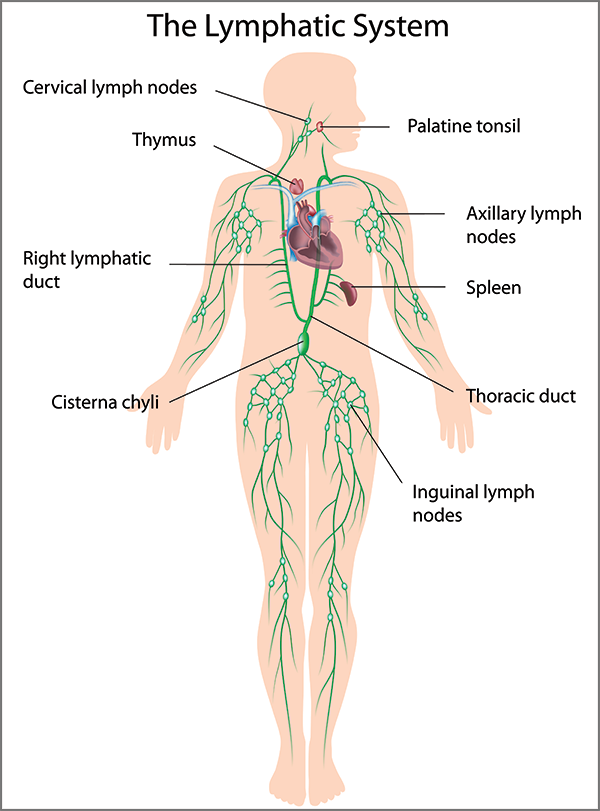
Lymphoid tissue is made mostly of white blood cells, or lymphocytes. There are two types of lymphocytes: B-lymphocytes (B-cells) and T-lymphocytes (T-cells). Normally, B-cells help your body fight infection by maturing into plasma cells. It’s the job of plasma cells to make antibodies – also called immunoglobulins or Ig for short – the proteins that help your body protect itself against infection and other types of threats. There are five main types of antibodies.
How does Waldenstrom’s macroglobulinemia affect the lymphatic system?
WM is a lymphoma that starts in your B-cells. When a person has WM, there has been a change, or mutation, to their B-cells resulting in the production of an abnormal lymphocyte-plasma hybrid, called a lymphoplasmacytic cell. These abnormal cancer cells multiply over and over again, and can overwhelm the bone marrow leading to a shortage of healthy blood cells in your body.
In WM, these cancer cells make abnormally large amounts of a specific antibody, called IgM. IgM is the largest of all the antibodies, called a macroglobulin. Usually, people have very low levels of IgM in their blood at any given time. With WM, you get high levels of IgM in your blood. Because of IgM’s large size and bulky structure the blood can become very thick, a condition called hyperviscosity. Thick, or viscous blood, cannot flow easily through the body. This can lead to many of the symptoms associated with WM, including excess bleeding, vision problems, cardiovascular complications, and nervous system issues.
What type of lymphoma is Waldenstrom’s macroglobulinemia?
WM is the most common form of a sub-type of non-Hodgkin lymphoma called lymphoplasmacytic lymphoma (LPL). WM cells are lymphoplasmacytic, meaning they have features of both plasma cells and lymphocyte cells.
WM is a slow-growing lymphoma and does not always require treatment. If you don’t have symptoms, you usually do not need to be treated. If you do develop symptoms, you may need treatment depending on the severity of the symptoms.
Learn the symptoms of WM and discuss any changes with your doctor. While there is no cure for WM yet, there are different types of treatments that can lessen or resolve your symptoms and control the disease for many years.


